Peptide High Quality: Value Of Third-party Validation
Verified > 99% Lab-grade Peptides
Other techniques like electrophoresis, capillary electrophoresis (CE), and nuclear magnetic resonance (NMR) can additionally be utilized to analyze peptide framework, charge, and pureness, guaranteeing extensive characterization. In COA testimonial, it generally includes HPLC purity screening, mass spectrometry identity verification, and batch-specific documentation revealing the evaluated lot, method, results, and date. For peptide pureness screening, reverse-phase HPLC is the standard theoretical design. The chromatographic pureness is after that determined by comparing the location under the primary peak with the total area under all incorporated heights.Discover our magazine to check out verified research study compounds and find out more regarding our testing and quality control process. Even small contaminations can change results, reduce reproducibility, or introduce undesirable variables into a research study. Scientists rely on precise, confirmed compounds to ensure their findings are both legitimate and constant.
One of the most rigid grade, involving careful HPLC purification-- occasionally multiple rounds-- and extensive QC. Needed for measurable researches, architectural biology, in vivo research models, and any application where even small amounts of contamination could influence outcomes. This is the grade where the boost most dramatically, due to the fact that accomplishing that last 1-- 3% of pureness needs discarding a significant portion of the synthesized product. A deletion peptide missing a single residue might still bind to the exact same receptor, however with various affinity or selectivity. In concentration-response experiments, these contaminants can change contours, squash plateaus, or present biphasic behavior that covers the true activity of the target compound. The isoelectric point (specialty) is an important criterion for recognizing peptide solubility and behavior in MOTS-c different environments.Truncation And Fragmentation Items
This level of detailed evaluation makes sure the peptide's Pharmaceutical Grade Peptides precision-- suggesting the sequence and purity are specifically as classified-- which is vital for speculative reproducibility. By verifying structure with numerous validated approaches, laboratory recognition warranties that scientists receive a high-purity peptide that will do as expected in the laboratory. Research laboratory validation of peptides is not just a clinical finest technique-- it's usually a governing demand when peptides are utilized in healing advancement or clinical research.- Testing allows researchers to comprehend specifically what remains in the vial, verifying both identification and top quality.
- If you've ever gotten an artificial peptide for a lab experiment, you've most likely observed a purity percentage on the certificate of analysis-- commonly worths like 95%, 98%, or even 99%.
- Ensuring that each batch goes through appropriate laboratory testing helps validate the peptide's authenticity and purity, which is essential for both research study credibility and safety and security.
- We can offer expert peptide purity determination services making use of analytical reversed-phase HPLC paired with mass spectrometry.
- Not every application needs 99% pureness, and purification is a significant element of peptide manufacturing cost.
The injector presents a specific quantity of example right into the mobile-phase stream. Constant injection volume matters due to the fact that overwhelming the column can broaden heights, distort purity price quotes, or conceal nearby impurities. A strong peptide testing workflow uses approaches that respond to complementary concerns. The table below is the practical way to think of usual tests when reading a peptide COA.
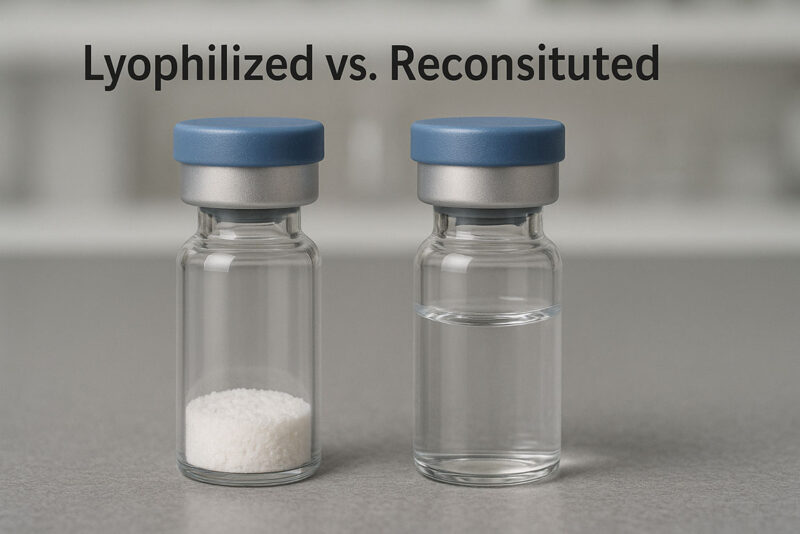
What Is Hplc? The Basic Principle
Trusted labs use tried and tested screening procedures to analyze peptide examples and confirm their pureness and chemical structure. One core technique is High-Performance Liquid Chromatography (HPLC), the gold standard for evaluating peptide purity. HPLC separates peptide mixtures and can spot also small pollutants listed below 1% of the sample [4] A typical lab will run the peptide through an HPLC system and create a chromatogram-- the primary height represents the target peptide, and any kind of extra heights suggest other substances. The purity is after that measured as the percent of the main height location versus overall locations, giving an accurate measure of just how pure the peptide is [2]
What Does Hplc-tested Mean?
These can be particularly problematic because their chromatographic actions is really comparable to the target peptide, making them more challenging to divide throughout filtration. When a peptide is 98% pure, that staying 2% isn't arbitrary noise-- it specifies, recognizable kinds of results. Mass spectrometry gauges the molecular weight of a compound with severe precision. For peptides, the most common methods are electrospray ionization (ESI-MS) and matrix-assisted laser desorption/ionization time-of-flight (MALDI-TOF). HPLC divides a mix right into its individual components based on just how each molecule interacts with a specifically developed column.
We support amino acid make-up evaluation and internet peptide content assessment for groups that need even more reputable focus setup and batch analysis. HPLC-tested suggests the sample was gone through high-performance fluid chromatography to divide the target peptide from pollutants. The purity portion is generally calculated from the primary height location split by the total integrated top area.